


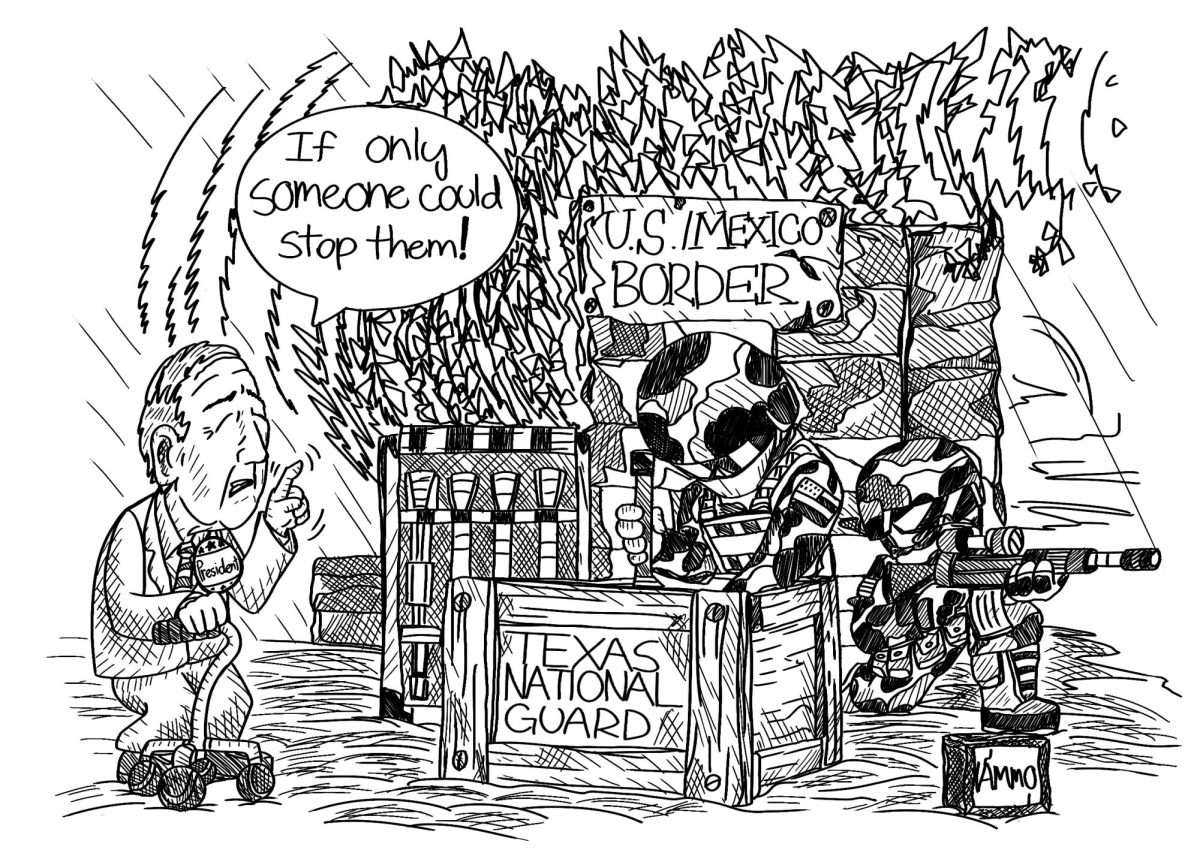
































Last July, U.S. Immigration and Customs Enforcement (ICE) received $75 billion in funding as part of President Donald Trump’s “One, Big, Beautiful Bill Act,” with a stated goal of detaining and deporting more undocumented immigrants while also protecting national security.
The bill made ICE the highest-funded law enforcement agency in the country, but with results that most Americans never expected or wanted. ICE’s expanded presence and violent tactics sowed fear and terror across U.S. cities, sparking protests from Los Angeles to Chicago, and culminating in the January killings of two American citizens in Minneapolis.
While some believe more ICE funding helps keep communities safe, others argue it can lead to serious consequences for immigrants and their families. Now, many are seeing a direct link between the billions of dollars ICE received and the increasingly brutal tactics it has employed.
“Anytime a bureaucracy receives more funding, it often becomes more aggressive in carrying out its mission,” said Diablo Valley College political science professor John Kropf.
“Budgets are the lifeblood of bureaucracies, and as funding increases, agencies typically expand their presence and activities.”
Today, more than 68,000 individuals are being held in ICE custody, marking one of the highest levels on record. While ICE reports that a majority of arrests have involved individuals with criminal histories, independent research suggests that a significant portion of detainees held no prior convictions — raising ongoing questions about how law enforcement priorities are determined.
Deaths in immigration custody have also increased, prompting concern among health experts and advocates. In 2025, at least 32 individuals died while in detention, the highest number recorded in two decades. This March, José Guadalupe Ramos, a 47-year-old Mexican national, died at the Adelanto ICE Processing Center in California, one of several reported deaths in the early months of the year.
Health policy analysts have linked these incidents to factors such as overcrowding, limited access to medical care, and systemic strain within detention facilities. Families of detainees have also reported prolonged separations, delayed hearings, and extended periods of uncertainty impacts that extend beyond what statistics alone can capture.
Activists and community members argue that ICE’s aggressive enforcement has contributed to fear and mistrust of law enforcement, highlighting an ongoing tension between national security objectives and civil liberties.
The yearlong wave of arrests and abuse has also alarmed students on the DVC campus, who agree that ICE’s actions have been harsh and unfair, leaving people feeling unsafe while taking resources away from those who truly need help.
“Not only is it ridiculous, but it brings us back to a time in history where Nazism was being taken into place,” said one DVC student who preferred to remain anonymous. “Looking into the economy, there’s people around the world who are actually in need of funds but have been cut off instead.”
Another anonymous student added, “The fear that ICE has created affects all families, [especially] kids currently, as they are starting to grow up worrying about deportation and it makes it hard to trust the community or authorities.”
Actions by ICE have prompted others to call for solidarity.
“Communities need to step up to support immigrants, especially white people,” said a third student here. “They can’t just sit back. They need to go out to protest or something.”
Meanwhile, policymakers face a complicated challenge. Some — primarily Republicans — defend ICE’s increased funding as necessary to maintain law and order, while others call for more oversight, transparency and protections for detainees.
But the solutions won’t be easy.
Kropf explained, “If you can’t eat, then you’re going to emigrate. When you start to look deeper at the reasons for immigration, you find different solutions instead of just rounding people up, deporting them, and mistreating them.”
He added, “As conditions in their homelands get worse, people are just going to keep coming.”