





































More than a month into the U.S.-Israeli war with Iran, the shock of the attack has worn off. What remains is more difficult. More than a dozen American troops and thousands of Iranians are already dead. The closure of the Strait of Hormuz — one of the most important arteries for global oil shipments — has caused fuel prices worldwide to soar. And even now, in the war’s second month, the administration still has not clearly defined what “victory” is supposed to mean.
All of this should be enough to make anyone cautious about more potential U.S. intervention in the Middle East. But it should not make us stupid. Too much of my generation’s thinking about war has been shaped by what some have called Forever War Syndrome: not the lived memory of our conflicts in Iraq or Afghanistan, so much as an inherited mood of those costly, foreign quagmires.
Many of the young people who now treat every use of American force as self-evidently illegitimate or inherently escalatory did not actually live through most of the global War on Terror. They know it mainly as a moral lesson with one approved conclusion: the Iraq War — which killed over 5,500 U.S. soldiers, upwards of half a million Iraqis, and cost trillions of dollars — was a historic disaster, therefore intervention itself is the problem.
That mindset has been intensified by the war in Gaza, which began after Hamas militants slaughtered more than 1,200 Israelis on Oct. 7, 2023, provoking a conflict that has led to more than 70,000 Palestinian deaths. For many younger Americans, outrage at Israeli military actions shaped how they view the entire region, including Iran. In some cases, this experience has led to apologetic or revisionist views of the Iranian regime — as if opposition to Israel automatically makes Iran a sympathetic or misunderstood actor.
But those supportive of today’s war in Iran haven’t been able to offer a coherent explanation, either. The White House’s rationale has shifted numerous times since the attacks began Feb. 28, as President Donald Trump, his defense secretary, secretary of state, and press secretary have all offered conflicting explanations about why the United States entered the war.
For example, last month Secretary of State Marco Rubio stated that the American strikes happened because the Israelis were already planning to carry out their own. That same day, Trump countered the claim, saying the actions of the Israelis played no role in America’s decision. With this degree of confusion at the top, what is the American public to believe?
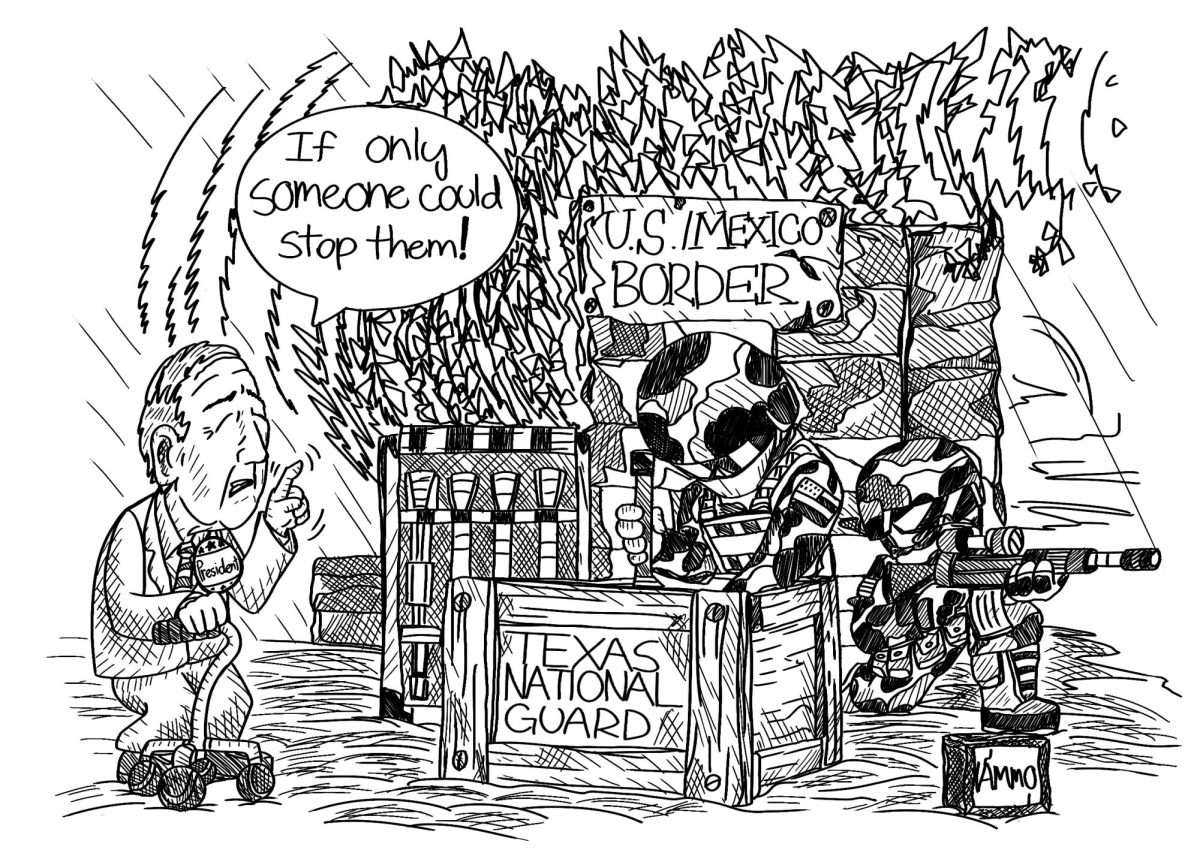
One of the biggest causes for skepticism about the war may be the simple fact that Trump ran for re-election by painting himself as “the peace president” — a dealmaker who could get things done without getting the U.S. into any new wars. Many were doubtful about his claim at the time, noting Trump’s first-term record which, between airstrikes on Syria and the killing of Iran’s Quds force leader Qasem Soleimani, wasn’t exactly isolationist. But by and large, he convinced the American public. This in and of itself is not odd — politicians lie all the time — but the u-turn from Trump’s “America First” agenda was a visible contrast in a way that broken political promises rarely are.
Considering America’s history of intervening militarily under false or questionable pretenses — from our 1983 invasion of Grenada, to the 2003 invasion of Iraq — the public has every reason to question the administration’s confident, simplistic justifications for the current war. But questioning a war is not the same as automatically opposing it. The real responsibility of a concerned citizen is to evaluate each case on its merits: what are the objectives, what are the risks, and what outcomes are realistically achievable?
International politics is not usually a story of good guys and bad guys who you can simply excuse or condemn depending on your geopolitical goals. In other words, rejecting Israeli government policy does not require pretending the Iranian regime is admirable. The Islamist government in Tehran has carried out mass arrests, executions, disappearances and internet blackouts, and has killed tens of thousands of its own citizens who were protesting for better economic conditions. Iran’s proxies in the so-called “Axis of Resistance” have for decades destabilized the region and fueled conflict in Iraq, Yemen, Lebanon, Syria and beyond. Opposition to one form of injustice is not a license to romanticize another.
But the argument against intervention isn’t a solution in itself. Isolationism — essentially the platform Trump ran on both times, in 2016 and 2024, with “America First” — is itself a choice with consequences. Without U.S. interventions, the world does not necessarily become peaceful. A power vacuum by its nature does not remain empty: someone inevitably moves to fill it.
For example, Russia took over Crimea in 2014, but Putin didn’t stop there despite attempts by European leaders to take a non-confrontational and forgiving approach towards Russia (even signing a massive natural gas project, the Nord Stream II pipeline, after Putin took Crimea). Likewise, something similar can be said about China, Iran or other powers that would benefit economically and politically from an American withdrawal from the world stage. If Washington steps back its engagement, other states will step forward. That is not a theory. It is how international politics works.
In fact, many people on the left who oppose intervention in the abstract already understand that intervention is sometimes justified. Their support for Ukraine gives this away; they know, correctly, that there are times when democracies should not simply be left to the mercy of authoritarian states. Once you admit that, the argument is no longer “Intervention: bad.” The questions steering the argument then become harder and more honest: when is force justified, for what purpose, and with what limits?
None of this means the war in Iran is wise. It may yet prove, as it already has to many, reckless or catastrophically escalatory. But the lesson of Iraq was never that America must oppose every intervention until all the facts are in. The lesson was that war demands rigorous debate, military restraint, and the humility to ask hard questions before pretending the geopolitical answers are obvious. “Wait and see” is not moral cowardice. Right now, it may be the only position serious enough to meet the crisis of the moment.