
















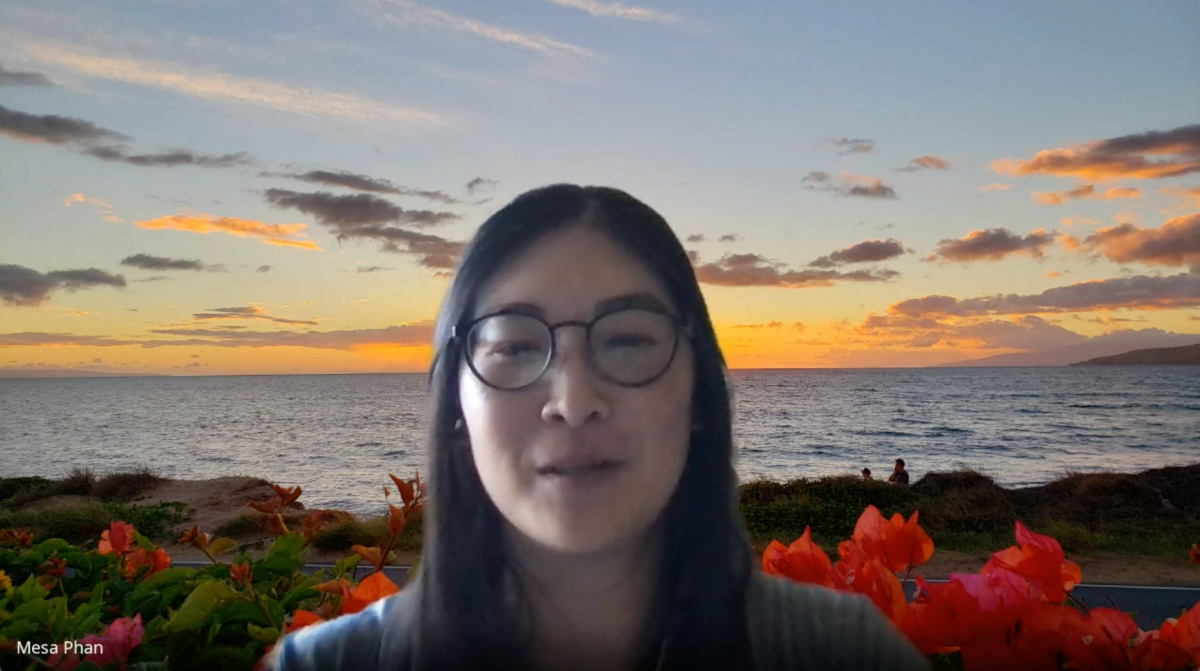




Diablo Valley College, in partnership with Contra Costa County, hosted an online course on Sept. 19 entitled “Prescription Drug Misuse & Overdose Rescue Training,” presented by Phia Halleen, coordinator for the Contra Costa County MEDS Coalition.
Describing the opioid crisis as a nationwide issue, as well as a local scourge within Northern California, the presentation highlighted the emergency drug Naloxone, commonly known as Narcan, which can be used to save the life of someone who has overdosed.
“Naloxone is one of many harm reduction measures that have been developed to help folks in active addiction as well as a community as a whole,” said Halleen in an interview with The Inquirer following the training.
In 2023, national data on drug overdoses showed that at least 107,543 people in the United States suffered from an opioid overdose, according to the Centers for Disease Control.
Contra Costa County’s 2025 heatmap of suspected overdoses within the Bay Area revealed that in the cities of Richmond, Antioch, Oakley, Concord, Crockett and Danville, fentanyl deaths have been prevalent. Seminars like the one offered last month at DVC are intended to help slow the crisis, said event organizers.
“Providing Naloxone and providing education and awareness has helped society and students to know that there is a solution, and provide support on scene if they experience someone experiencing an overdose,” said Jessica Recinos, the county’s coordinator of prevention of alcohol and drugs, who assisted Halleen by answering questions and responding to comments in the chat box.
Naloxone — the brand name for Narcan — is a medication that reverses opioid overdoses, and is usually effective for between 30 and 60 minutes, said organizers.
As part of the presentation, Halleen showed a slide detailing how to use Narcan. During an opioid overdose, when a person undergoes life-threatening symptoms causing their nervous system to enter a depressive state, Narcan is used as a nasal spray to jolt them back to consciousness.
Sample containers, which carry four milligrams of spray, were given to attendees who completed the training. Students can find Naloxone locally at Diablo Valley College, Los Medanos College, local pharmacies and libraries, as well as at public defender offices, said Halleen.
Each Naloxone kit given to students and the public contains at least two Naloxone doses. This is a mandatory amount since, in some cases, the number of doses needed to resuscitate someone may reach as high as five or more, depending on how long it takes them to recover from the overdose.
“Naloxone box-stands on campuses have helped reduce stigma, especially for young people,” said Halleen. “I would love for students to know that it is legal and safe to carry, and that it’s one step they can take prevention wise.”
“Always carry Naloxone and be prepared, always reducing your risk.”
Halleen provided Contra Costa County’s 24-hour behavioral health line to assist if someone is undergoing an overdose. At the end of the presentation, attendees were given a chance to ask questions about how the medication works and how to use it, as well as its benefits.
“It can be used for any age, and even if you are not overdosing, it’s okay to still administer it,” Recinos said, referring to the Good Samaritan Law, a law that protects the public from civil liability when engaging in a voluntary rescue act.
The next online course on the use of Naloxone will be on Nov. 21 from 1 p.m. to 2 p.m., with other dates scheduled as well in early 2026.