



























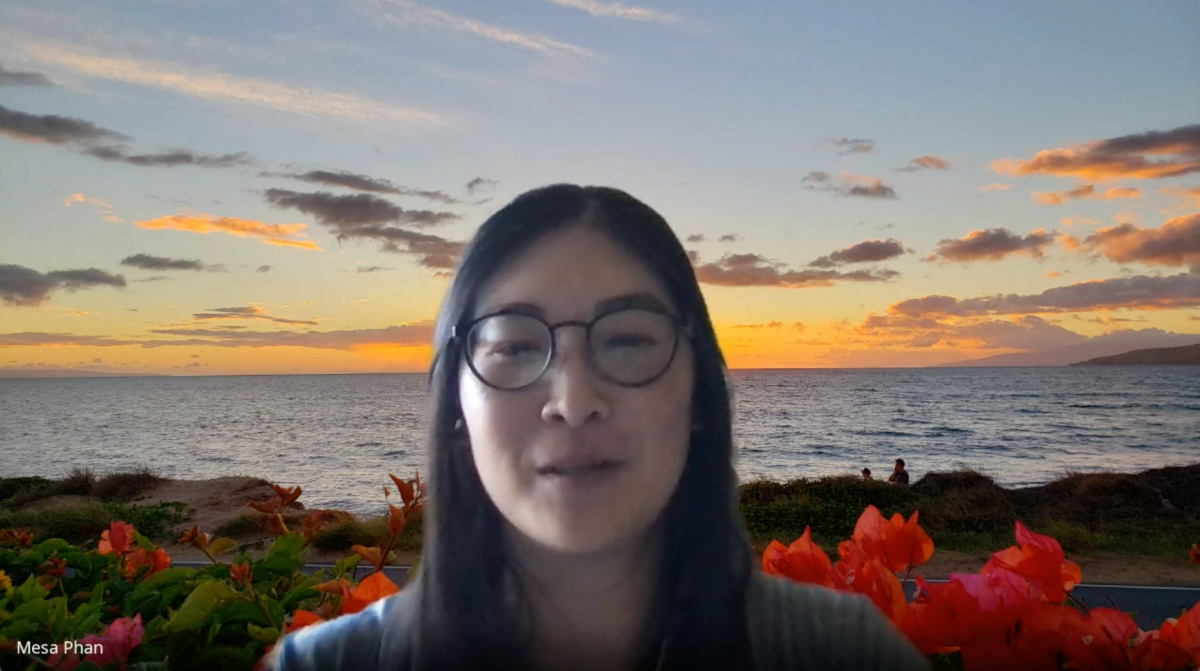










Both campuses of Diablo Valley College recently displayed handmade posters and facts about climate change, thanks to Zhen Hui Huang, a high school senior at College Park High School in the dual enrollment program, who led a week-long awareness campaign in support of the proposed “Make Polluters Pay” bill now being debated in the California legislature.
SB 684, formally known as the “Polluters Pay Climate Superfund Act, was proposed by state Senator Carline Menjivar and Assembly member Dawn Addis. Organizations like the Center for Biological Diversity and California Environmental Voters have sponsored and supported the bill.
The legislation, which mirrors similar measures already passed in New York and Vermont, seeks to hold major oil and gas companies legally accountable for their role in contributing to pollution and climate change from 1990 to the present.
The campus awareness campaign organized last month by Huang involved other high school students in the dual enrollment program, and featured poster-making sessions and writing-to-your-representative workshops, aimed at educating students about how legislation can change the state’s approach to environmental responsibility.
Under the proposed legislation, the state would calculate the share of pollution generated by each corporation and require them to pay into a fund that supports environmental cleanup and recovery projects across California. The money would help restore areas contaminated by industrial waste, particularly those in low-income and underserved communities that have long faced disproportionate exposure to pollution.
According to the Environmental Protection Agency, low-income communities are more vulnerable to climate change because they are often in locations more prone to climate-related hazards like flooding and air pollution. These communities also have more limited financial resources to avoid pesticides and microplastics in products, said Huang.
“Environmental damage does not always impact everyone equally, as people with lower incomes are often exposed to high levels of pollutants,” said Huang.
Therefore, “[low-income] communities that are exposed should have some justice and repair. This bill could help bring that.”
Huang said she was inspired by youth movements in New York and Vermont, where students and young climate change activists helped raise awareness about the bill’s importance and pressured lawmakers in those states to act.
For Haung, the campaign was as much about education as advocacy.
“I didn’t want to do a walkout because that just means students would miss class,” she said, so “I instead did a few days of some educational information so that we can still have the same impact.”
Other students around DVC have also shown that they care about climate policy and found it important to learn more about the issue.
“I used to think climate change was just about recycling,” said Alyssa Ramos, a second-semester student at DVC, “but as I’ve done more research, I realize how big a problem climate change really is and how our health is so negatively impacted by it.”
Another student expressed that the broader issue facing their peers is climate anxiety.
“Our generation grew up hearing about melting ice caps and wildfires,” said the student, who chose not to be named. “It’s easy to feel powerless, you know?”
In 2024, Californians passed Proposition 4, a $10 billion state bond measure for safe drinking water, wildfire prevention, and protecting communities and natural land from climate hazards, which will be funded through taxes.
If passed, the “Make Polluters Pay” bill would become one of the most comprehensive environmental efforts in the U.S since the passage of Prop. 4.
According to advocates of the measure, fossil fuel companies have caused environmental damage through air and water pollution and habitat destruction. Science shows that the burning of fossil fuels releases greenhouse gases that cause climate change and extreme weather conditions.
For Huang and others, the “Make Polluters Pay” bill will ensure that fossil fuel corporations fund the remediation of the damage they’ve caused while preserving taxpayer dollars.
“It’s important that people continue to do their research and understand how exactly climate change affects their day-to-day lives, they may be surprised,” said Huang.