








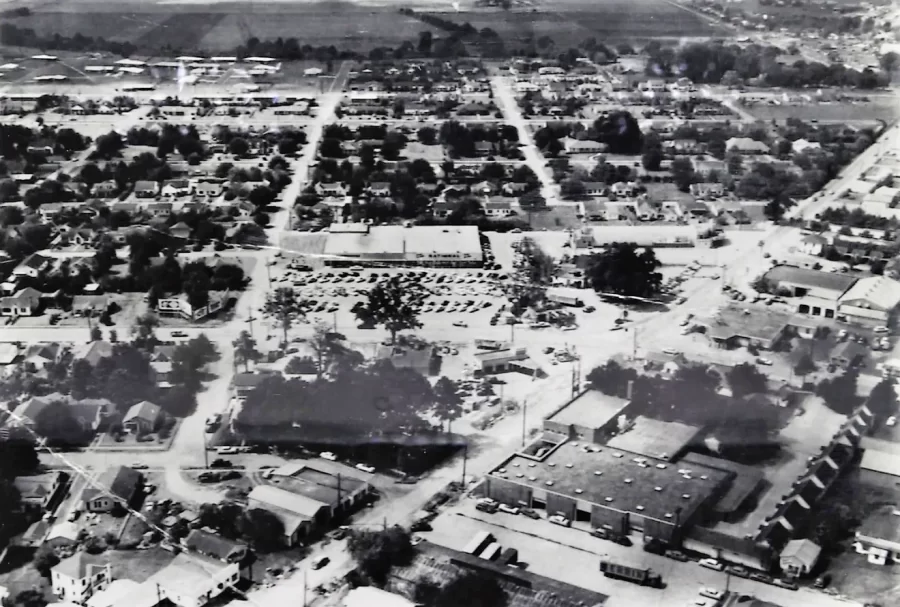




























For more than a century, the C&H Sugar refinery has been a defining landmark of Crockett, an East Bay town with a population of 3,700, located roughly 15 miles northwest of Diablo Valley College.
Its massive industrial complex built on the Carquinez Strait processes hundreds of thousands of tons of cane sugar each year, and employed generations of local men and women as it shaped the identity of the small Contra Costa County community.
C&H isn’t just a big local employer. Its Crockett refinery processes over 700,000 tons of cane sugar annually, and refines roughly 15 percent of all cane sugar consumed in the U.S.
Now, a story of pollution threatens to derail the company’s regional legacy, as regulatory actions recently taken by the state’s water quality board are stirring tensions between the refinery and Crockett residents, many of whom express fears about their health and say the plant’s environmental footprint has become harder to ignore.
Last month, the California Regional Water Quality Control Board hit C&H with a $734,000 fine for wastewater-discharge violations recorded between 2020 and 2024, claiming the refinery’s water-treatment plant exceeded the state’s permitted pollution limits by 15 times during that period.
For some locals in Crockett, seeing the news brought back memories of the “rotten-egg” odor they recalled lingering for more than a month over the town in 2022, when regulators traced the smell to elevated hydrogen sulfide emissions from the refinery.
“I remember waking up and thinking something had died under my house,” said longtime resident Marian Lopez, speaking recently with The Inquirer. “It wasn’t just a smell, but it almost burned your nose, and we didn’t get any answers for weeks.”

Federal regulators have also been cracking down on the company. Earlier this year, the U.S. Environmental Protection Agency ordered C&H to stop dumping raw sugar into the Carquinez Strait, after the agency documented at least three discharge incidents involving cargo operations at the refinery.
Raw sugar in waterways fuels bacterial growth that consumes oxygen, a process that scientists and biologists warn can suffocate fish and other aquatic life due to its high biochemical oxygen demand.
In response, the company said it had already completed a multi-year, $30 million upgrade to its dock equipment and handling procedures, an investment detailed in a January 2025 EPA order, and a C&H spokesperson said the refinery remained “committed to operating safely and sustainably.”
However, many residents say they have grown skeptical of corporate promises after years of odor events and delayed reporting. For them, the environmental impacts felt immediate.

“People forget this is a small town,” said resident Anthony Ramirez, who has lived two blocks from the refinery for the last 18 years, as he recalled the incidents.
“If something leaks, spills, or smells bad, we feel it right away. We’re the ones who have to breathe it in and live right next to it.”
Others who were interviewed said that while they may not exactly oppose the refinery, they want to see greater transparency coming from the town’s biggest employer.
“C&H has been here longer than most of us,” said store owner Diane Cheng, “but the community deserves clearer communication. When something happens, we shouldn’t hear about it days or even weeks later.”

Environmental advocates argue that the refinery’s violations highlight the many challenges of balancing heavy industrial operations with small-town residential life along the shoreline. The Carquinez Strait, a crucial link between the Delta and the San Francisco Bay, remains vulnerable to runoff, spills and air emissions.
As state and federal monitoring continues, Crockett residents said the real test will be whether the refinery’s recent upgrades can lead to actual and lasting improvements. In a town dominated by the long shadow cast by the refinery, many wonder whether the next chapter will be marked by greater accountability — or just more smoke drifting across the Carquinez Strait.
“We’re not asking for perfection,” said longtime Crockett resident Linda Perez. “We just want the truth, and a little peace in the air that we breathe.”
Steven R Trotter • Dec 15, 2025 at 3:13 pm
If the EPA is going to impose a fine, it should kick that money back to the residents. To be spent on some needs of the community.